
Writing as kintsugi
Loss, and the healing of fragmentation

I got to the end of the first draft of a new novel this month. Admittedly, it is rough—full of plot lacunae and with no definitive ending to speak of—but I needed to submit it to a reader who promised to read the draft to date. So, I gathered the fragments of files and documents on my hard drive and tried to construct the linear order of a story. It was time consuming and frustrating, and I cursed my lack of a systematic approach to organising the material.
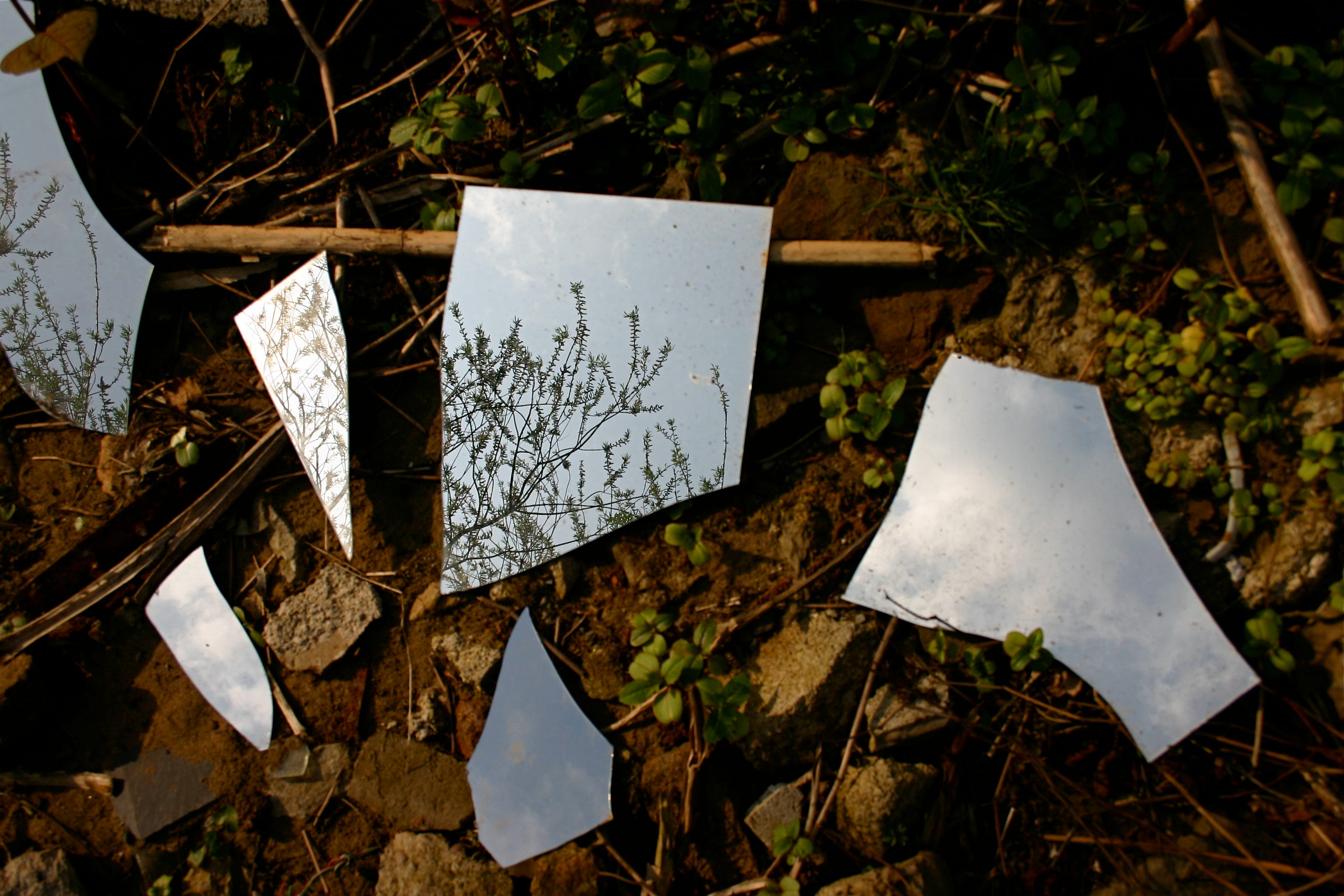
Years ago, I attended a workshop called Authentic Artist, in which I was encouraged to embrace mess—even (literally) to dance with it; to allow the truth of the work to unfold. Thinking now of my current novel, I see how it has emerged from, and through, intuition; from a capacity to let the process lead, instead of holding fixed ideas about the result.
This surrendering of control is a long way from how I used to write: meticulously planning not just the overarching plot but each individual scene. That system worked, to a degree—but I wonder what else might have emerged had I let it unfold in a more organic way. I’m not decrying the ‘plotting’ way of coming first to writing. It works wonderfully for some writers. All writers, all artists, have their own way and, of course, the way shifts and changes with the needs of each project. The process needed for one piece does not necessarily work for another.
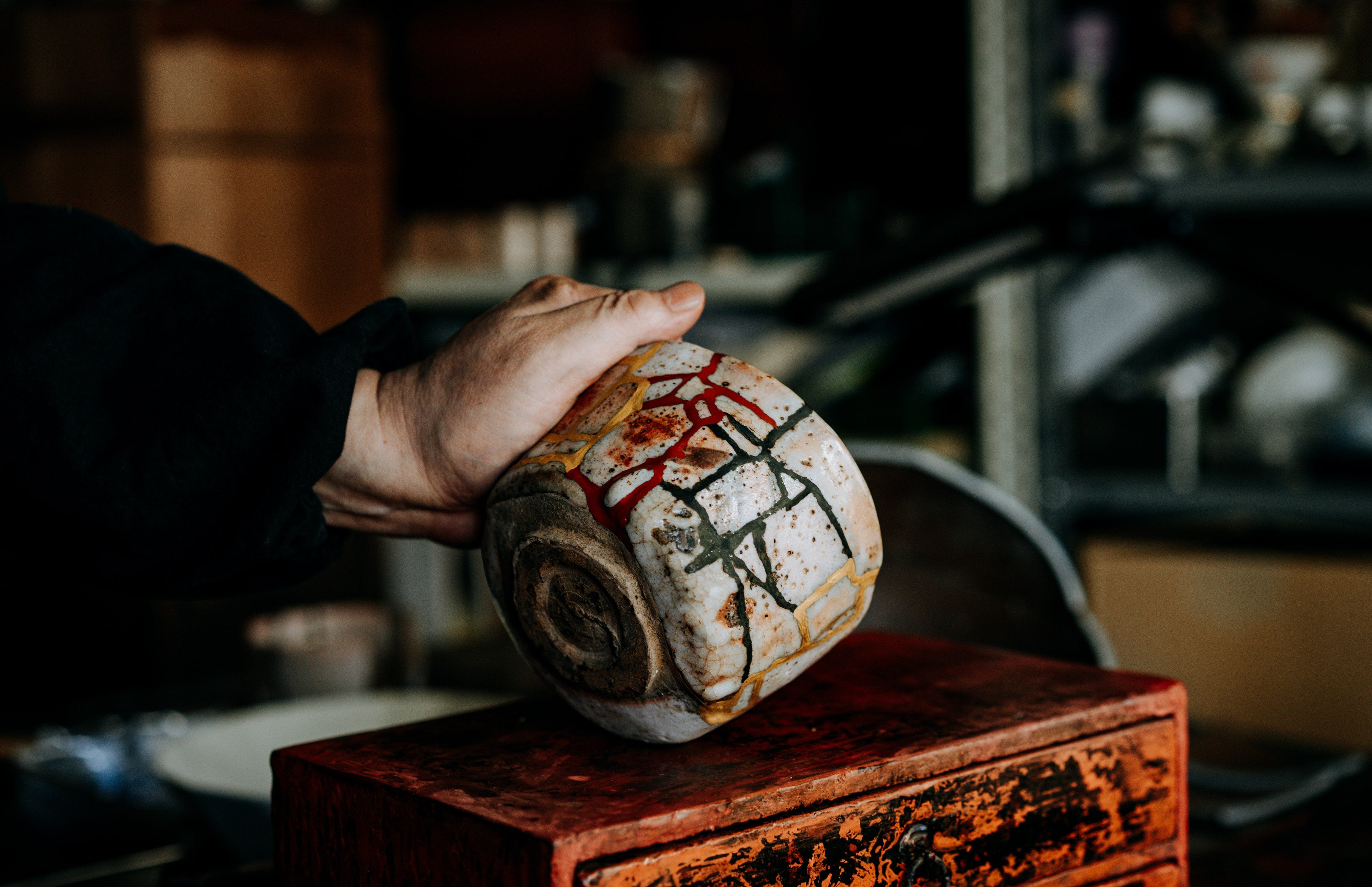
What came into my mind as I was glueing together these writing shards, the fragmented pieces of my latest novel, was kintsugi—the Japanense art of mending broken pottery, in which the fault lines are lacquered (often with gold) to make a feature of the damage. Kintsugi, as artist and author Edmund de Waal writes ‘is not an art of erasure—the invisible mend, the erasing of a mistake—but rather a way of marking loss.’
Loss. So much is lost in the act of creating something: the fragments we scribble and discard; the invisible passages or sketches that in retrospect are only ever a foundation for a more fully-formed scene or image or sequence in the next stage or draft of the work.
De Waal’s reflections on kintsugi were made during the global pandemic, a period during which he was intensively making pots in his studio throughout quarantine. For him, at that moment, the kintsugi process was resonant of a wider cultural loss: of connection, of certainty, even of life. And loss is still, of course, ever-present. The climate emergency holds the possible future loss of our planet. At the time of writing—there are the current, horrific losses experienced in Ukraine. Loss of dignity; loss of home and shelter. Loss of life, and loved ones.
How do we mark loss? How do we name it? In the face of such basic fight for survival and human rights, reflections on art might be thought somewhat frivolous. There’s no comparison, of course, between the violence being inflicted in Ukraine and the breaking of a pot, or the editing of a piece of writing. Yet, for me, the intrinsic fracturing that happens during the creative process speaks, paradoxically, of wholeness—the shadow as well as the light, the imperfect as well as the perfect. In this sense, the process of art—as well as its content—can be, in some small way, a mirror to our humanity.
How does the conflict in Ukraine reflect a wider, global brokenness and brutality in this cultural moment that needs healing? How can the sharp edges of the shards of our expression be, in the end, fused and mended—not to avoid pain but to articulate it, to better know what it might teach us about the complexity of being alive?
In the kintsugi process of knitting together my manuscript, I realised something else. The story I am seemingly writing about flooding, while it nods towards the realities of the climate crisis, is fundamentally about healing. It charts how two broken people look to each other to mend themselves—or not. It explores how communities come together to find a collective way to voice their suffering and lean into it, in the same way de Waal describes kintsugi: not to erase loss but to mark it. Without experiencing my story as fragmentary in this way, I’m not sure I’d have grasped the connection between its drafted form and its content; between the broken pieces of my prose and the healing my soul wants this novel to explore.